Selected from Equine
Hormonal, clinical, and survival outcomes in horses and ponies diagnosed with pituitary pars intermedia dysfunction in primary care practice.
31 viewsPopularClinical evidence update from Journal of veterinary internal medicine
Active page filter
Equine news, articles, products, and companies.

What’s happening in the veterinary world
Clinical evidence update from Veterinary radiology & ultrasound : the official journal of the American College of Veterinary Radiology and the International Veterinary Radiology Association
More top stories
Two additional stories selected from the latest Veterinary33 coverage.
Free reader access
Create a profile to comment, join discussions, receive more relevant recommendations, keep your activity connected, and access selected opportunities.
Personalized reading
A quieter selection shaped by relevance, freshness, engagement, and your recent activity.

Selected from Equine
Clinical evidence update from Journal of veterinary internal medicine
Equine Feed
225 Equine articles
Equine1Clinical evidence update from Journal of veterinary internal medicine
Professional discussion
Latest perspectives and contextually relevant learning resources.

A useful point for equine practice is the detailed documentation of clinical, imaging, and histologic features of testicular seminoma provided in this recent case series. As clinicians navigate the diagnostics of various equine diseases, referencing established veterinary resources can support clear communication with owners. A relevant section is available in HORSES, written by Marta Barba Recreo and John Schumacher, as an optional resource for further reading.
Equine0Clinical evidence update from Veterinary ophthalmology
Equine1Clinical evidence update from Veterinary ophthalmology
Professional discussion
Latest perspectives and contextually relevant learning resources.

This retrospective study highlights how therapeutic UVC irradiation influences bacterial load management in microbial keratitis cases. Understanding the broader context of equine clinical disease and management remains essential for practitioners when evaluating emerging ocular interventions. For those interested in exploring general concepts of common equine pathologies, the book HORSES by Marta Barba Recreo and John Schumacher serves as optional further reading. A relevant section is available in HORSES; Equine Owner Educational Atlas.

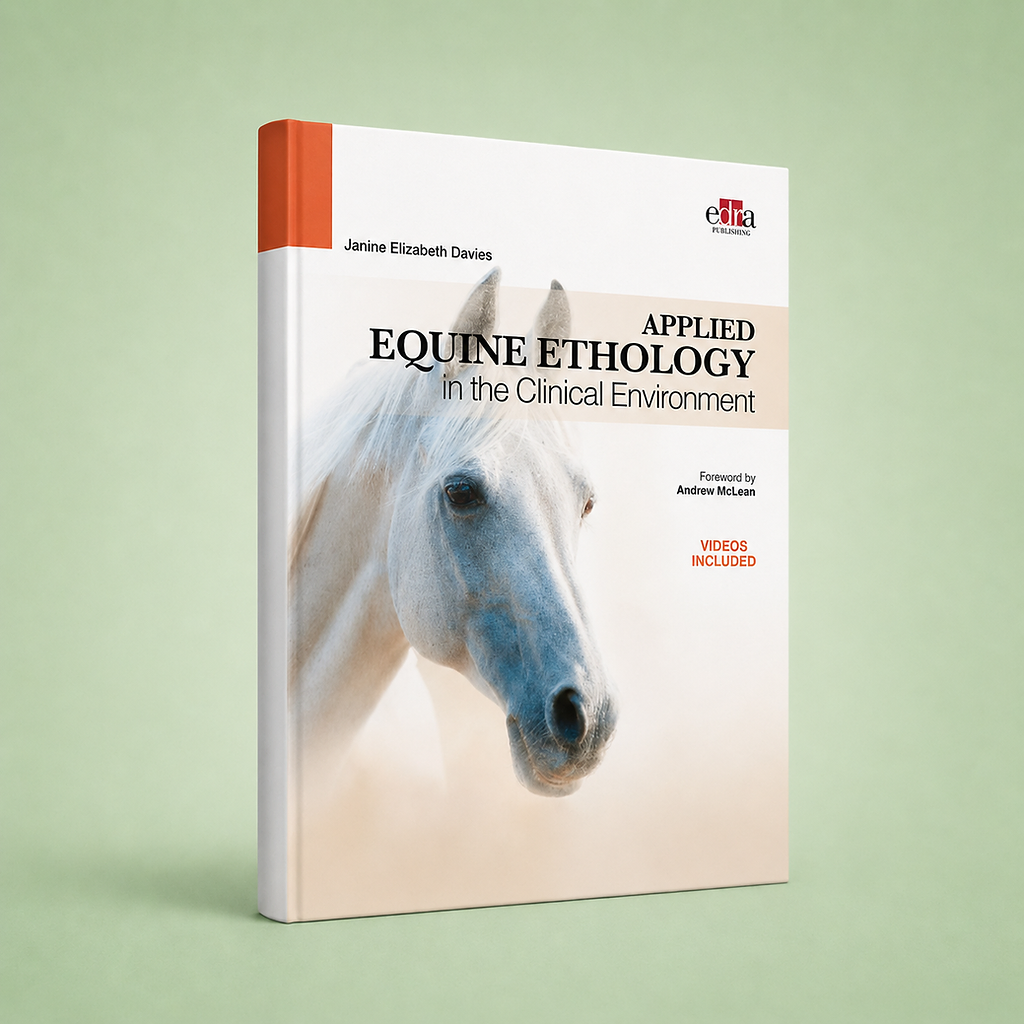
Janine Davies
Equine medicine, behavior, and lameness references.
Equine1Clinical evidence update from Veterinary surgery : VS
Professional discussion
Latest perspectives and contextually relevant learning resources.

A useful point for equine practice is the retrospective evaluation of high-metacarpal deep digital flexor tenotomy paired with Steward clog shoeing for chronic refractory laminitis. Both this study and the comprehensive text HORSES by Marta Barba Recreo and John Schumacher address essential components of equine diseases and clinical assessment. A relevant section is available in HORSES.
Equine0Clinical evidence update from Animals : an open access journal from MDPI
Last week’s essential reading
The strongest stories from the previous completed week, resurfaced before they disappear deeper into the feed.
Closest dated archive
Sep 10–24, 2026
No articles carry a reliable publication date for Oct 5–11, 2026. Showing the closest earlier dated archive selections.

Clinical evidence update from Journal of veterinary internal medicine
31 viewsPopular
Clinical evidence update from BMC veterinary research
30 viewsPopular
Clinical evidence update from Frontiers in veterinary science
25 viewsPopularResurfaced before these stories disappear deeper into the feed
Full archive
Equine1A randomized trial in 54 horses found no significant early postoperative pain benefit from intraperitoneal lidocaine after colic surgery.
Professional discussion
Latest perspectives and contextually relevant learning resources.

This is really nice!
Equine0Read more <a href="
Two-week editorial rewind
A focused look back at important reporting from the second completed historical week.
Closest dated archive
Aug 13–27, 2026
No articles carry a reliable publication date for Sep 28 – Oct 4, 2026. Showing the closest earlier dated archive selections.

Clinical evidence update from Frontiers in veterinary science
12 views
Clinical evidence update from Frontiers in veterinary science
13 views
Clinical evidence update from Veterinary surgery : VS
7 viewsResurfaced before these stories disappear deeper into the feed
Full archive
Equine0Clinical predictive models use a patient's baseline demographic and clinical data to make predictions about patient outcomes and have the potential to aid clinical decision making.
Equine0Autologous platelet concentrates (APCs) are being used increasingly in horses to enhance regeneration in tissues that have poor natural healing capabilities.
Equine0Joint injections are commonly used in equine practice for diagnosis and treatment of joint disorders. Performing joint injections is hence an essential skill for equine practitioners.
Equine0To compare serum amyloid A (SAA) concentration, plasma fibrinogen concentration, total WBC count, and serum albumin-to-globulin concentration ratio (A:G ratio) in clinically normal (CN) and...
Equine0Equine herpesvirus 1 (EHV-1) infection in horses is responsible for upper respiratory infection in young horses and abortion, usually in late gestation, although recent work by Smith et al [1] and...
Three-week editorial rewind
Selected reporting and evidence from an earlier week that remains relevant to Veterinary33 readers.
Closest dated archive
Apr 10 – May 8, 2026
No articles carry a reliable publication date for Sep 21–27, 2026. Showing the closest earlier dated archive selections.

Lameness due to musculoskeletal disease is the most common diagnosis in equine veterinary practice. Many of these orthopaedic disorders are chronic problems, for which no clinically satisfactory...
42 viewsPopular
The pressure on equine veterinarians to provide services that meet with a client's demands, that is, realizing client satisfaction, is considerable.
17 views
Ten stifles from 5 clinically sound adult horses were scanned by high-resolution ultrasound.
19 viewsResurfaced before these stories disappear deeper into the feed
Full archive
Equine0Mesenchymal stem cells, considered one of the most promising cell types for therapeutic applications due to their capacity to secrete regenerative bioactive molecules, are present in all...
Equine0A survey of veterinary radiation therapy facilities in the United States was done in 2001 to determine the type of equipment available, radiation protocols used, case load, tumor types irradiated, as...
Equine0Sarcoids are the most frequently diagnosed dermatological tumour in horses. It is a disease that can affect various species of equids, such as donkeys, mules and zebras.
Equine0Masses of the prepuce and penis are common clinical presentations for the equine veterinarian, encompassing a number of differential diagnoses.
Equine0To investigate risk factors for development of equine protozoal myeloencephalitis (EPM) in horses.
Showing 20 of 213 articles
193 more available in this feed
Edra Publishing
Professional veterinary references selected from the Edra Publishing catalog.
Veterinary33 standards
Structured veterinary coverage designed to make important information easier to scan, understand, and revisit.
Article cards prioritize title, subject, species, date, and practical takeaway.
Built for veterinary news, public health, companion animals, livestock, poultry, and equine.
Each article can carry category, species, specialty, keywords, and evidence metadata.
Cleaner navigation and subject filters help readers reach the right content faster.